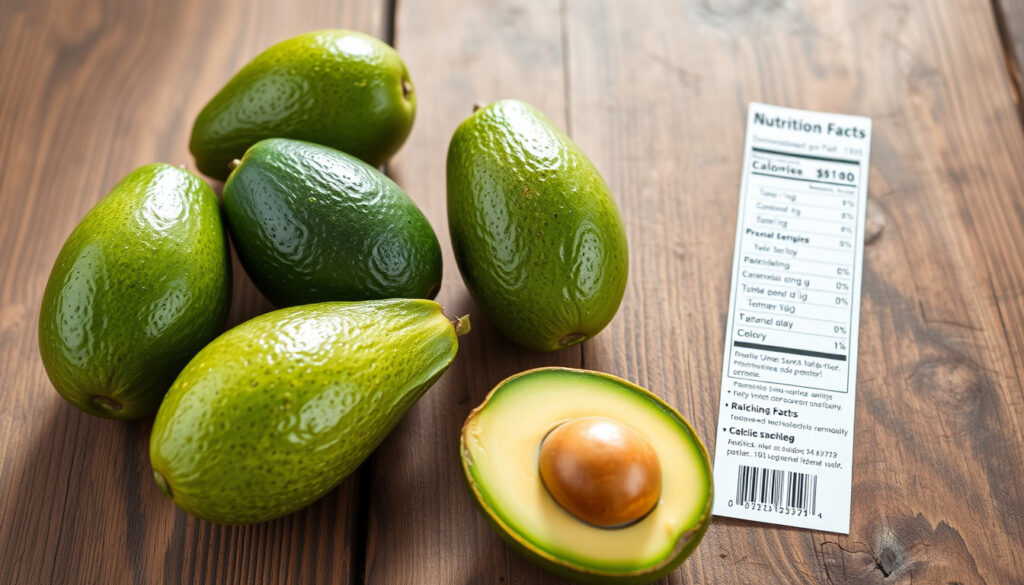
How Many Calories in an Avocado? Sizes, Nutrition Facts
If you’ve ever stood in the produce aisle wondering whether that creamy green orb is helping or hurting your diet goals, you are not alone. The avocado wears its health credentials loudly — fiber, potassium, heart-healthy fats — but the calorie numbers still make people pause mid-slice. A medium avocado lands at about 240 calories according to the Harvard Nutrition Source, yet research keeps pointing out that avocado eaters tend to weigh less than non-eaters. That contradiction is exactly what this guide untangles.
Medium Avocado (145g): 240 calories ·
One-Third Medium (50g): 80 calories ·
Avocado per 100g: 171 calories ·
Fat Content (Medium): 22 grams ·
Fiber (Whole): 14 grams
Quick snapshot
- Medium avocado: 240 cal (Harvard Nutrition Source)
- 50g serving: 80 cal (Love One Today)
- 1 Hass avocado: ~250 kcal (PMC Study)
- Whether avocados reliably reduce belly fat across all body types
- Whether industry-funded studies fully account for confounding diet factors
- Exact calorie variation between Hass and Florida avocado varieties
- 2019: Study found daily avocado reduced abdominal fat in 3 months
- 2022: Research showed no weight gain from increased avocado intake
- Ongoing: LLU running 6-month trial on visceral fat reduction
- Portion control matters more than elimination for weight managers
- Daily avocado consumption appears safe within balanced diets
- Future studies may clarify fat-loss mechanisms
| Nutrient | Amount (Medium Avocado) | Source |
|---|---|---|
| Calories | 240 | Harvard Nutrition Source |
| Fat (g) | 22 | Harvard Nutrition Source |
| Carbs (g) | 13 | WebMD |
| Fiber (g) | 10+ | Harvard Nutrition Source |
| Protein (g) | 4 | WebMD |
| Potassium (% DV) | 20 | California Avocado |
How many calories in an avocado?
The calorie count in an avocado depends entirely on which size you are eating. One medium Hass avocado (about 145g without skin and stone) contains roughly 240 calories, according to nutrition data from Harvard T.H. Chan School of Public Health. A standard USDA serving size is 50g — roughly one-third of a medium — and that delivers 80 calories. At the higher end, a large Florida or California avocado weighing around 201g without skin and stone can run 322 calories.
Calories in a medium avocado
The medium avocado is the most commonly referenced benchmark in nutrition databases and dietary guidelines. The Harvard Nutrition Source confirms a whole medium avocado contains approximately 240 calories, 4g protein, 17g carbohydrates, and 15g of monounsaturated fats. These numbers fluctuate slightly depending on growing conditions, variety, and ripeness, but 240 remains the most cited figure across authoritative sources.
One medium avocado is roughly equivalent in calories to a small meal — which is exactly why understanding portions matters if you are tracking intake.
Calories in avocado per 100g
When you normalize for weight, 100g of avocado flesh contains approximately 160–171 calories depending on the source. Foodstruct reports 160 cal per 100g while Nutracheck, using UK standards, calculates closer to 171. Both figures confirm that avocado is an energy-dense food — higher in calories by weight than most fruits because of its fat content. For context, 100g of strawberries holds just 32 calories.
Calories in avocado half or small
Split that medium avocado in half and you are looking at roughly 120 calories per hemisphere. A small or mini avocado, scaling down from the 171 cal per 100g baseline, would fall in the 80–120 calorie range depending on actual weight. Most nutrition labels and diet apps treat a half-avocado as one serving, though the USDA officially designates 50g as a standard serving — about one-third of the fruit.
Is avocado ok for losing weight?
This is where the nutrition science gets genuinely interesting. Despite carrying roughly 240 calories per medium fruit, multiple peer-reviewed studies report that regular avocado consumption does not cause weight gain and may actually support weight management. A 2019 study found that eating one avocado daily for three months reduced abdominal fat compared to an isocaloric diet without avocado. A 2022 study confirmed that increasing avocado intake did not affect BMI or body fat percentage in a general population sample.
Avocado calories vs weight loss benefits
The apparent paradox resolves when you look at what happens after you eat an avocado. The combination of fiber (about 10g per medium fruit) and monounsaturated fats triggers satiety signals that help prevent overeating later in the day. Research from the Hass Avocado Board-funded studies — which NutritionFacts.org notes may carry some industry bias — still showed that avocado eaters had roughly half the odds of metabolic syndrome compared to non-eaters.
The 12-week PMC study found that adding one Hass avocado daily to a hypocaloric diet produced similar weight loss results as the control group while also reducing visceral fat — suggesting the avocado may offer benefits beyond simple calorie substitution.
Does avocado reduce belly fat?
The 2019 study found a statistically meaningful reduction in abdominal fat among participants eating one avocado daily for three months. However, researchers from Loma Linda University note that more long-term trials are needed before drawing firm conclusions. An upcoming LLU study — led by Dr. Joan Sabaté — will track whether six months of daily avocado consumption reduces visceral fat in a controlled setting. Until those results arrive, the belly-fat reduction claim holds moderate confidence at best.
Is it okay to eat one whole avocado a day?
For most people, eating one whole avocado per day fits comfortably within a healthy dietary pattern. The FDA’s standard serving size of 50g is conservative by design, but clinical studies testing one avocado daily — including the 12-week hypocaloric diet trial published on PMC — did not report adverse metabolic effects in healthy adults. The main considerations are individual calorie needs, existing heart conditions (given the fat content), and allergies.
One medium avocado delivers 240 calories in a nutrient-dense package — beneficial for someone managing overall intake, but potentially counterproductive if it pushes a sedentary person past their daily energy budget.
Daily avocado and heart health
Avocados have earned cardiovascular reputation points for good reason. The Harvard Nutrition Source highlights that a medium avocado provides 15g of monounsaturated fats, which replace saturated fats in the diet and support healthy cholesterol profiles. Additional benefits include 10g of fiber, no cholesterol, and low sodium. The American Heart Association recognizes the role of unsaturated fats in heart disease prevention, placing avocados in the favorable category alongside olive oil and nuts.
Is it unhealthy to eat avocado daily?
Unless you have a specific avocado allergy or are on a very low-fat medical diet, a daily avocado is not inherently unhealthy. The NHANES survey data correlates regular avocado consumption with lower BMI and better metabolic markers — though causation is harder to pin down than correlation in population studies. The caveat from NutritionFacts.org applies: some benefit studies were funded by the Avocado Board, which introduces potential bias toward favorable results. Read those findings with appropriate skepticism while acknowledging the underlying mechanism (fiber + healthy fats) is physiologically sound.
Why do some doctors say not to eat avocados?
Most mainstream physicians do not advise against avocado consumption. The “doctors say not to eat avocados” framing typically surfaces in two scenarios: very-low-calorie diet plans where every calorie matters, and patients with specific lipid disorders or medications affected by high-fat intake. Some nutritionists on strict fat-restricted protocols recommend limiting avocado precisely because of its energy density — not because the fruit is harmful, but because one medium serving carries the calorie equivalent of a slice of bread.
Common concerns and counters
The central concern is calories, not health risks. Avocado is a high-fat food — 22g per medium fruit is nothing to casually dismiss on a 1,500-calorie plan. The counter-argument, supported by PMC research, is that the satiety effect of avocado fiber and fat may reduce total daily calorie intake, neutralizing the caloric cost. A 6-week study adding a whole avocado to participants’ diets found no significant weight gain, suggesting the body compensates naturally when nutrient-dense whole foods replace processed alternatives.
What not to mix with avocado
The more relevant “what not to mix” question concerns dietary context. Pairing avocado with other high-fat, high-calorie foods — think loaded avocado toast with bacon, cheese, and Eggs Benedict — can push a meal well past 800 calories before you realize it. Combining avocado with added sugar (as in chocolate avocado mousse) creates an energy-dense product that undermines the fruit’s satiety advantage. The fruit itself is nutritionally sound; the issue is what surrounds it on the plate.
Which is healthier, banana or avocado?
This comparison depends entirely on which nutrients you are prioritizing. Avocado wins on healthy fats, fiber, and potassium content — delivering roughly 485mg of potassium per medium fruit versus a banana’s 422mg. Banana wins on carbohydrates, quick energy, and accessibility as a portable snack. From a weight management standpoint, the PMC study data shows avocado consumers averaging 74.5kg with a BMI of 26.0, while non-consumers averaged 77.9kg with BMI 27.3 — though diet and lifestyle factors complicate direct comparison.
Bananas offer fast-digesting carbohydrates ideal for pre-workout fuel; avocados offer sustained satiety better suited to managing between-meal hunger. The “healthier” choice depends entirely on your nutritional goal at that moment.
How healthy are avocados?
Avocados are among the most nutrient-dense whole foods available. They contain 20 vitamins and minerals, including potassium (more than bananas), vitamin E, B vitamins, and lutein for eye health. Their fat composition — predominantly monounsaturated oleic acid — supports brain function, nutrient absorption for fat-soluble vitamins, and cardiovascular health. The fiber content (10g+ per medium) promotes digestive health and stable blood sugar. California Avocado Commission nutrition data highlights phytonutrients unique to the fruit that have shown anti-inflammatory properties in laboratory studies.
Avocado: fruit or vegetable?
Botanically, avocado is a fruit — specifically a single-seeded berry in the Lauraceae family. Culinary use treats it as a vegetable due to its savory flavor profile and typical deployment in salads, guacamole, and toast. This dual identity has no bearing on the nutritional profile but does influence how the food is categorized in dietary guidelines and grocery store placement.
The calorie data across different avocado sizes shows a clear progression that helps with meal planning.
| Size Type | Weight (g) | Calories | Fat (g) |
|---|---|---|---|
| Mini / Small | 70 | ~120 | 11 |
| Medium (standard) | 145 | 240 | 22 |
| Large | 195 | ~320 | 29 |
| Extra Large (Florida/California) | 201 | 322 | 30 |
| 1 cup cubed (150g) | 150 | 240 | 22 |
| 1 cup sliced (146g) | 146 | 234 | 21 |
| 1 cup pureed (230g) | 230 | 368 | 34 |
| 50g serving (1/3 medium) | 50 | 80 | 7 |
Upsides
- Rich in monounsaturated fats linked to heart health
- High fiber (10g+) promotes satiety and digestive health
- More potassium than bananas per serving
- Contains 20 vitamins and minerals
- Studies show no weight gain from daily consumption
- Replaces less nutritious processed snacks
Downsides
- Energy-dense: 240 calories per medium fruit
- Some benefit studies funded by avocado industry
- May not suit very low-fat or calorie-restricted diets
- Allergies possible (latex-fruit syndrome)
- High-fat content concerns some physicians
- Regional and variety calorie differences exist
“The study will examine whether eating one avocado per day reduces visceral adipose fat in the abdomen.”
— Joan Sabaté, MD, DrPH, Director, Center for Nutrition, Lifestyle and Disease Prevention, Loma Linda University
“Habitual consumption of avocados may reduce adult weight gain.”
— PMC Researchers, Adventist Health Study-2 cohort analysis
“Including 1 Hass avocado daily in a hypocaloric diet resulted in similar weight loss as control, with additional reduction in visceral fat.”
— PMC Study Authors, 12-week clinical trial
The avocado calorie story is fundamentally one of trade-offs, not absolutes. Yes, 240 calories in a medium fruit sounds like a lot on paper — but those calories come wrapped in fiber and fat that keep you full, nutrients that support heart and brain health, and a versatility that helps whole-food diets replace processed alternatives. Clinical evidence from peer-reviewed studies does not support the “avocados are fattening” myth, even if the energy density gives pause. For anyone tracking macros or managing weight, the practical takeaway is straightforward: know your portion size, account for the calories, and recognize that swapping an avocado for a bag of chips is a net nutritional win regardless of the calorie count.
Related reading: What Is Keto Diet – Basics, Foods, Benefits, Risks · Cream Cheese Frosting Recipe – Stable Piping and Fixes
foodstruct.com, news.llu.edu, loveonetoday.com, healthline.com, webmd.com, nutritionfacts.org, blog.ochsner.org, pmc.ncbi.nlm.nih.gov, nutracheck.co.uk
While a medium avocado packs around 240 calories, a medium apple typically delivers just 95, highlighting key fruit nutrition differences.
Frequently asked questions
What do 100 calories of avocado look like?
100 calories of avocado is roughly 60–65g of flesh — about half a medium avocado or two heaping tablespoons of mashed avocado. This portion delivers approximately 7g of fat, 3g of fiber, and a modest amount of potassium and vitamin E.
How many calories in an avocado seed?
Avocado seeds are not typically consumed in significant quantities and do not appear in standard nutrition databases. When dried and ground (a practice in some traditional medicine), estimates suggest roughly 50–70 calories per tablespoon of seed powder, but this is not a recognized food data source.
How many calories in an avocado slice?
A single avocado slice from a medium avocado cut lengthwise contains approximately 15–20 calories, depending on thickness. A standard toast topping of six thin slices would run around 90–120 calories.
How many calories in an avocado toast?
A basic avocado toast (half a medium avocado, roughly 120 calories, on one slice of whole-grain bread at about 80–100 calories) totals 200–220 calories before any toppings. Add a poached egg and you are pushing 300 calories — still reasonable as a meal, but worth noting if you are logging intake.
How many calories in an avocado 1 cup?
One cup of cubed avocado (150g) contains approximately 240 calories, based on Foodstruct data. Sliced avocado in the same measure (146g) runs about 234 calories. Pureed avocado is more calorie-dense at 368 calories per cup due to the smaller volume of skin and stone removed.
Is avocado a fruit or vegetable?
Botanically, avocado is a fruit — specifically a single-seeded berry. Culinary use classifies it as a vegetable, much like tomatoes. The classification affects where it appears in grocery stores but has no bearing on its nutritional profile or health effects.
What not to mix with avocado?
The main dietary caution is pairing avocado with other high-fat, high-calorie additions — bacon, cheese, sour cream — in quantities that exceed your daily energy needs. Avocado’s health benefits shine when it replaces less nutritious fats and processed foods, not when it layers on top of them.
More related posts
 Ickenham Travel Collapse Administration – ATOL Refunds and Customer Guide
 Find an EE Shop Near Me – Store Locator, Appointments & Services
 Rebecca Ferguson: Actress vs Singer – Tom Cruise, Zayn Malik
 What Is a CCJ? County Court Judgments Explained UK
 Jake Paul Broken Jaw: Joshua Fight Injury, Surgery & Recovery
 Mar ton Recovery Contact Number: Official Phone & Advice
 Best Rewards Credit Card UK: Top Picks No Fee & Reviews
 Cambridge Half Marathon 2025: Dates, Routes, Registration
