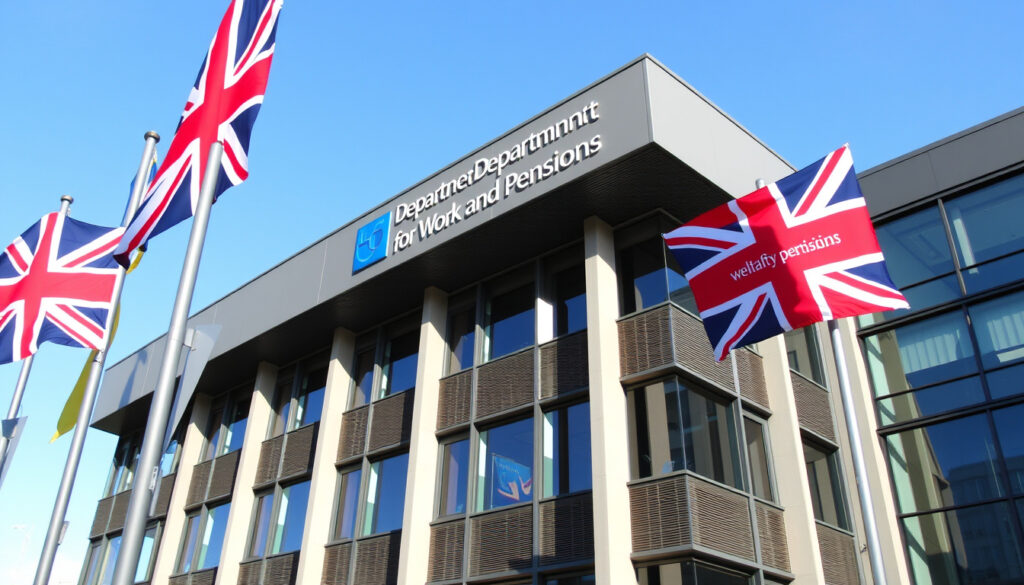
Department for Work and Pensions News: Latest Updates
For millions of UK pensioners, April 6, 2026 marks a significant date: the day new State Pension rates kick in, with the full new rate rising to £241.30 per week. This increase follows a ministerial statement issued on 26 November 2025, confirming the government’s commitment to the triple lock mechanism.
New State Pension rate: £241.30/week · PIP increase: 3.8% from April 2026 · Ministerial statement: 26 November 2025
Quick snapshot
- Pensions legislation confirmed for April 2026 implementation (GOV.UK)
- State Pension rises to £241.30 under triple lock (GOV.UK DWP)
- PIP rates increase by 3.8% on 6 April 2026 (Homecare.co.uk)
- Which metric triggered the triple lock for 2026 (inflation, earnings, or 2.5%)
- Exact figures behind the Universal Credit LCWRA halving for new claimants
- Full scope of PIP assessment changes from the Timms Review
- 26 Nov 2025: Ministerial statement confirmed rates (GOV.UK)
- 16 Feb 2026: Publication last updated on GOV.UK (GOV.UK)
- 6 Apr 2026: New rates take effect (GOV.UK)
- May 2026: Additional DWP policy changes begin
- 2026-2030: Proposed PIP and Universal Credit reforms expected
- Ongoing: Timms Review examining PIP assessments
How much will the pension rise in 2026?
For those receiving the full new State Pension, the weekly rate climbs from £230.25 to £241.30—a difference of just over £11 per week. This change takes effect from and applies across England, Scotland, Wales, and Northern Ireland with no regional variations. The increase is confirmed in full accordance with the triple lock mechanism, which bases the rise on whichever is highest of inflation, average earnings growth, or 2.5%.
State Pension forecast
The triple lock is a government commitment that ensures the State Pension rises by whichever figure is highest out of three measures: the Consumer Prices Index (CPI) inflation rate, average earnings growth, or a guaranteed 2.5% floor. The exact figure triggering the April 2026 increase has not been publicly specified in isolation, but the resulting rate of £241.30 per week is now locked into official GOV.UK documentation. For context, the old State Pension (Category A or B basic) rises from £176.45 to £184.90 per week for 2026/27.
That £11 weekly increase translates to roughly £572 extra per year before taxes. For pensioners relying on State Pension as their primary income, the difference can cover several weeks of groceries or a portion of winter energy bills.
Factors influencing the rise
Beyond the headline figure, several supporting rates also increase. Most benefits—including Jobseeker’s Allowance, Employment and Support Allowance, and Universal Credit standard allowances—rise by 3.8% in line with CPI for 2026/27. The Pension Credit standard minimum guarantee for single claimants rises from £227.10 to £238.00 per week, which means more people may qualify for means-tested top-ups if their other income falls below this threshold. The couple disability premium rises from £61.65 to £64.00, providing additional support for households where a partner has a disability.
- The new State Pension full rate applies to those with 35+ qualifying years
- Those with fewer qualifying years receive a proportionate amount
- Pension Credit can top up income to the minimum guarantee level
How much savings can a pensioner have in the bank in the UK?
Savings affect pensioners differently depending on which benefits they claim. Capital and savings are assessed through a “tariff income” calculation for means-tested benefits like Pension Credit, which can reduce the amount you receive above certain thresholds. The rules distinguish between those already receiving Pension Credit and new applicants, with transitional protections sometimes applying to existing claimants.
Savings limits for full pension
For Pension Credit purposes, the first £10,000 of savings is ignored entirely and does not affect the amount you receive. Above this threshold, every £500 (or part thereof) in savings is treated as generating £1 per week in “tariff income.” This means someone with £15,000 in savings would have a tariff income of £10 per week counted against their Pension Credit claim. There is no upper savings limit that automatically disqualifies you from Pension Credit, but above approximately £19,250 in capital, tariff income typically reduces payments to zero.
Impact on benefits
Importantly, savings do not affect the State Pension itself, which is contribution-based and non-means-tested. Only means-tested benefits like Pension Credit, Housing Benefit, and Council Tax Support use capital in their calculations. The new minimum guarantee rate of £238.00 per week for single claimants means pensioners with modest savings may now find themselves newly eligible for top-up support, even if they previously earned slightly above the old threshold.
How much State Pension will I get if I have never worked?
If someone has never worked or has insufficient National Insurance contributions, they may still receive a reduced State Pension based on their contribution record. The minimum amount depends on how many qualifying years of National Insurance contributions or credits they have accumulated over their working life. Those with no contributions at all may receive the old basic State Pension at a reduced rate, or potentially qualify for Pension Credit as a means-tested alternative.
Eligibility without contributions
The new State Pension requires a minimum of 10 qualifying years to receive any payment, with the full rate requiring 35 years. For those with between 10 and 35 years, the weekly amount is calculated proportionally. Individuals with gaps in their contribution history may be able to make voluntary National Insurance contributions to fill those gaps, though deadlines and eligibility conditions apply. Credits—such as those received during periods of caring responsibility, illness, or unemployment—count towards qualifying years just like paid contributions.
Voluntary contributions options
Those who have missed years of National Insurance contributions can currently pay voluntary contributions to fill gaps, subject to time limits. The current rates for voluntary Class 3 contributions are £17.45 per week (2025/26 rates, subject to adjustment). However, recent years have seen time-limited windows for filling older gaps, so anyone considering this should check current deadlines on GOV.UK or consult a benefits adviser before making payments.
A single missing year can reduce your State Pension by around £11 per week over a 20-year retirement—that’s over £11,000 in foregone income. Checking your contribution record via your GOV.UK personal tax account takes minutes and could be worthwhile if you have any gaps.
What is the lowest State Pension amount?
The lowest State Pension payment depends on your contribution record and which pension system you fall under. The new State Pension has a minimum floor for those with exactly 10 qualifying years, while those who reached State Pension age before April 2016 may be on the older basic State Pension system with different rules and minimum rates.
Basic State Pension rate
For those on the old basic State Pension system (Category A or B), the standard rate for 2026/27 rises to £184.90 per week. This applies to those with 30 years of contributions who reached State Pension age before 6 April 2016. Those with fewer than 30 years receive a proportionate amount. The old system has no mechanism for flat-rate minimums in the same way the new system does—the rate is purely contribution-based.
New State Pension minimum
Under the new State Pension (for those reaching State Pension age from 6 April 2016 onwards), the minimum weekly amount for someone with exactly 10 qualifying years would be approximately £68.94 per week before any means-tested top-ups. In practice, anyone with very low or no State Pension entitlement is likely to qualify for Pension Credit, which tops up weekly income to £238.00 for single claimants. This creates a practical floor well above the raw State Pension minimum for those with limited contribution histories.
What is the Department for Work and Pensions contact number?
The DWP operates several helplines for different benefit types, with the main contact points varying depending on whether you need to discuss State Pension, PIP, Universal Credit, or other benefits. Free 0800 numbers are available for most enquiries, though wait times can be longer during peak periods or immediately after rate changes when many claimants have queries.
Phone numbers for pensions
The Pension Service helpline can be reached on 0800 731 0469 (free from most landlines and mobiles). For those with speech or hearing difficulties, textphone services are available on 0800 731 0464. The lines are open Monday to Friday, typically from 8am to 6pm. Callers should have their National Insurance number and relevant correspondence details ready to help advisers locate their claim quickly.
Contact for cost of living support
For queries about Cost of Living Payments—which were provided as extra support between 2022 and 2024 and whose guidance was last updated —the main Universal Credit helpline at 0800 328 5644 handles most related questions. These payments were automatically paid to eligible claimants of means-tested benefits, with no separate application required. The DWP encourages anyone who believes they were entitled but did not receive a payment to contact them directly.
- Pension Service: 0800 731 0469
- Universal Credit helpline: 0800 328 5644
- Textphone (Pensions): 0800 731 0464
- Lines open Monday to Friday, 8am to 6pm
2026/27 Benefit and Pension Timeline
Five key dates shape the 2026/27 benefits landscape, from the ministerial statement confirming new rates to when changes take effect.
| Date | Event |
|---|---|
| 26 February 2026 | Ministerial statement sets 2026/27 benefit and pension rates |
| 16 February 2026 | Benefit rates publication last updated on GOV.UK |
| 6 April 2026 | PIP and State Pension rates increase take effect |
| 1 May 2026 | Additional DWP policy changes begin |
| 1 April 2026 | Cost of Living Payment guidance last updated |
The pattern across these dates shows a deliberate sequencing: ministerial confirmation followed by official publication, then implementation, with follow-on policy changes arriving after the main uprating.
What We Know for Certain
The rates are confirmed. The ministerial statement of 26 November 2025 set out the full schedule for 2026/27, with publication last updated on 16 February 2026. The key confirmed facts are straightforward: all major benefits increase by 3.8%, the new State Pension reaches £241.30 per week, and PIP rates match the figures listed on GOV.UK. The increase applies UK-wide with no regional variation between England, Scotland, Wales, or Northern Ireland.
What Remains Uncertain
Despite the clear rate changes, several questions linger. The precise economic metric that triggered the triple lock—September’s inflation figure or average earnings growth—has not been publicly isolated, though the outcome is confirmed. The Timms Review examining PIP assessments is underway, with proposed changes expected between 2026 and 2030, but the details of what those reforms might entail remain under discussion. Government pressure to reduce long-term PIP costs coexists with the April rate increases, creating a complex picture for claimants unsure whether their ongoing awards might face future review adjustments.
“For April 2026, the government has confirmed that the increase will be applied in full accordance with the triple lock.”
— DWP Retirees YouTube channel analysis (2026)
“PIP payments are going up around 3.8%. Now, I know what you’re thinking, finally some good news.”
— PIP Payments YouTube coverage (2026)
“The triple lock is a commitment that says the state pension will rise by whichever is the highest out of three things, inflation, average earnings growth, or 2 and 1/2 percent.”
— UK Pension Update YouTube presenter (2026)
Related reading: Universal Credit Cost of Living Payment 2025 – DWP Confirms No Payments · NHS Band 6 Salary 2026/27: Scales & Progression Guide
youtube.com, gov.uk, youtube.com, youtube.com, benefitsandwork.co.uk, assets.publishing.service.gov.uk, gov.uk, moneysavingexpert.com
DWP updates confirm the full state pension rising to £241.30 weekly in 2026, alongside PIP rates climbing, as detailed in DWP PIP and pension updates.
Frequently asked questions
What is DWP latest news on PIP?
PIP rates increase by 3.8% from 6 April 2026. The Daily Living standard rate rises to £76.70 per week, with the enhanced rate reaching £114.60. Mobility standard increases to £30.30 and enhanced to £80 per week. A Timms Review examining PIP assessment criteria is also underway.
What is good news for pensioners today?
The new State Pension rises to £241.30 per week from 6 April 2026, an increase of over £11 weekly compared to the 2025/26 rate. Pension Credit’s minimum guarantee also increases to £238.00 for single claimants, potentially opening eligibility for those previously earning just above the threshold.
What are the latest pension news from government?
A ministerial statement on 26 November 2025 confirmed all 2026/27 benefit and pension rates, with the official publication updated on 16 February 2026 on GOV.UK. The triple lock mechanism applies in full, with most benefits rising by 3.8% in line with CPI inflation.
What is DWP news on cost of living?
Cost of Living Payments, which provided extra support from 2022 to 2024, are no longer being distributed. Guidance on those payments was last updated on 1 April 2026 on GOV.UK. The new benefit rates for 2026/27 are designed to provide ongoing support through the regular uprating mechanism rather than separate lump-sum payments.
What is the Department of Work and Pensions phone number 0800?
The Pension Service helpline is 0800 731 0469, available Monday to Friday. For Universal Credit queries, call 0800 328 5644. Textphone users can reach the Pension Service on 0800 731 0464. All these numbers are free to call from UK landlines and mobiles.
What is Department of Pensions telephone number?
The relevant department is now called the Department for Work and Pensions (DWP), which handles both pensions and benefits. The Pension Service, part of the DWP, can be reached at 0800 731 0469 for State Pension enquiries and claims.
Is there an increase for pensioners in 2026?
Yes, effective 6 April 2026. The full new State Pension rises to £241.30 per week, up from £230.25. The old basic State Pension rises to £184.90 per week. Pension Credit minimum guarantee rises to £238.00 for single claimants. All increases apply UK-wide.
What is the lowest State Pension amount?
Under the new State Pension, someone with exactly 10 qualifying years would receive approximately £68.94 per week. However, means-tested Pension Credit tops up income to £238.00 per week for eligible single claimants, creating a practical safety net well above the raw minimum for those with limited contribution records.
For pensioners and benefit claimants, the practical implication is clear: check your award letters against the new figures, verify your bank details are up to date with the DWP, and—if you think you might now qualify for Pension Credit—act before the new thresholds take effect. Those already receiving means-tested support should receive automatic adjustments, but anyone whose circumstances have changed in the past year may find themselves newly eligible for assistance they didn’t previously qualify for.
More related posts
 Karim Benzema: Al-Hilal Move, Ronaldo Reaction & Career Facts
 Jonathan Brandis: The Tragic Story and Unanswered Questions
 How Long to Cook Chicken Breast in Air Fryer: Times & Temps
 Signs of Bowel Cancer – Key Symptoms to Watch For
 Gregor Fisher: Weight Loss, Health, and 2026 Tour
 Liverpool FC News Now – Slot Faces Pressure After City Loss
 Evans Halshaw Used Cars – Inventory, Warranties and Dealers
 Best Arepa de Choclo Near Me: Guide to Sweet Corn Arepas
