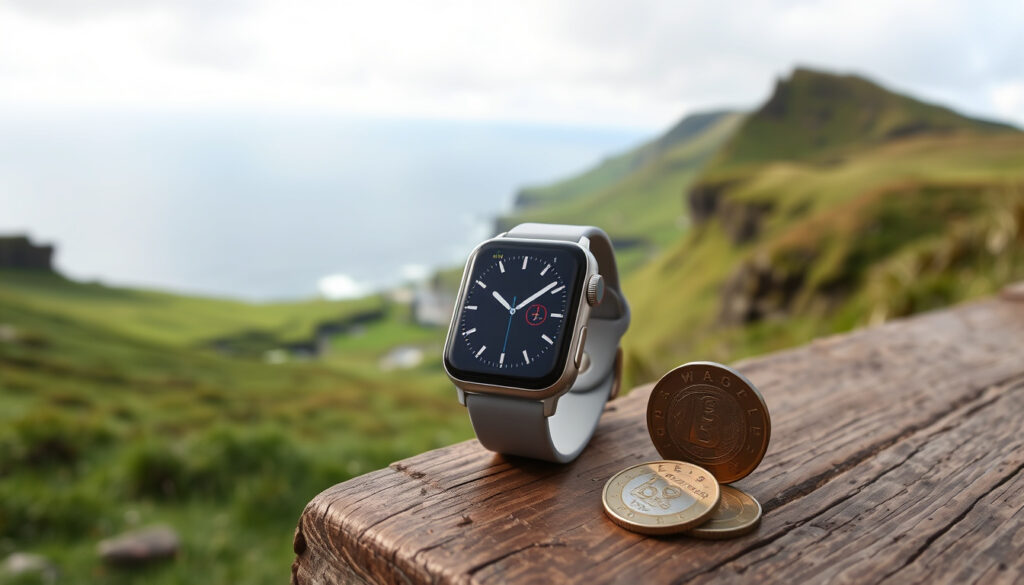
Apple Watch Series 10: Specs, Price & Worth It in Ireland
If you’re weighing up an Apple Watch in Ireland right now, the Series 10 sits in an awkward spot. Apple’s latest Series 11 starts at €449 (Apple), but the Series 10 remains on sale — and for the first time, you can often find it at a discount. Whether you’re upgrading from an older model or buying your first smartwatch, that gap matters. This guide breaks down what each model actually delivers, where to buy in Ireland, and which one makes sense depending on what you’re looking for.
Battery Life: Up to 18 hours ·
Display: Biggest and most advanced yet ·
Thickness: Thinnest Apple Watch ever ·
Low Power Mode: Up to 36 hours ·
Workout Types: 12 including HIIT and Yoga
Quick snapshot
- Series 10 battery rated at 18 hours (Wrist Envy)
- Series 11 battery rated at 24 hours (Apple IE)
- Both support 42mm and 46mm case sizes (Wrist Envy)
- Exact Series 10 retail pricing in Ireland post-Series 11
- Specific Ireland promotions or bundle deals
- Real-world battery tests for Series 10 in 2026
- Series 11 launched September 2025 (Wrist Envy)
- No new Apple Watch expected until September 2026 (MacRumors)
- Series 10 still stocked by Irish retailers in 2026
- Series 10 likely to see deeper discounts as stock clears
- Series 11 remains Apple’s mainstream offering
- watchOS 26 brings Sleep Score and hypertension alerts
| Label | Value |
|---|---|
| Model | Apple Watch Series 10 |
| Battery | 18 hours |
| Case Options | Aluminium, Jet Black |
| Band Sizes | S/M |
| Warranty | 2 years via retailers |
Is the Apple Watch Series 10 worth it?
The honest answer depends on what you’re upgrading from and whether you can find the Series 10 at a meaningful discount. Apple positioned the Series 10 as the thinnest Apple Watch ever with the largest display at launch, and those specs still hold up against the Series 11.
After 100 days of use
The Series 10 delivers reliable all-day battery life at 18 hours, which extends to 36 hours in Low Power Mode (Vodafone IE). Fast charging gets you to 80% in 30 minutes, which remains a practical advantage for daily use. The LTPO 3 OLED display reaches 2000 nits brightness, making it readable in direct sunlight — useful for Irish outdoor workouts or commuting.
For buyers coming from Series 7 or earlier, the Series 10 represents a significant jump in display size and processing speed. The question is whether the price gap to Series 11 justifies the difference.
Value compared to SE and Ultra
The Apple Watch lineup in Ireland now spans three clear tiers. The SE starts at €269 (Apple), making it the entry point for essential health tracking. The Series 10 sits in the middle, offering the largest display and most polished design. The Ultra 3 starts at €899 (Select Online IE) for buyers who need the rugged build and extended battery.
Irish buyers face a clearer choice between tiers now that Series 11 sits at the top of the mainstream lineup.
| Model | Ireland Price | Best For | Key Trade-off |
|---|---|---|---|
| Apple Watch SE | €269 | First-time smartwatch buyers | No always-on display, smaller screen |
| Apple Watch Series 10 | Varies (retailers) | Balanced features and price | Older chip than Series 11 |
| Apple Watch Series 11 | €449 | Latest features, longest support | Premium over Series 10 pricing |
| Apple Watch Ultra 3 | €899 | Athletes and outdoor use | Oversized for everyday wear |
What is the difference between the Apple Watch Series 10 and 11?
Understanding what Apple actually changed helps you decide whether the price premium for Series 11 makes sense.
Design and display upgrades
Both the Series 10 and Series 11 share the same 42mm and 46mm case sizes, and critically, the same strap compatibility (Wrist Envy). If you’ve already invested in bands for a Series 9 or earlier, those will work across both models.
The most meaningful difference is battery life. Series 11 delivers 24 hours of normal use compared to the Series 10’s 18 hours (Apple IE). In Low Power Mode, Series 11 reaches 38 hours versus the Series 10’s 36 hours. The real-world gap may be smaller — reviews report 27-32 hours of actual use for Series 11 (Wrist Envy).
For Irish buyers who commute long hours or forget to charge regularly, the 6-hour battery difference could be the deciding factor between needing a charger at your desk or not.
Series 11 also gains Ion-X glass with improved scratch resistance for the aluminum model, and sapphire crystal is available on titanium versions (T3). The Series 10’s glass remains more prone to micro-scratches with daily wear.
Band compatibility
Both generations use identical band mechanisms, so any Apple Watch band released since Series 7 will fit either model. This includes the new Milanese Loop and Brave Banana strap options. For buyers with existing collections, this eliminates a potential upgrade cost.
The specs comparison shows where Apple made meaningful improvements and where they kept things identical.
| Specification | Series 10 | Series 11 |
|---|---|---|
| Case Sizes | 42mm, 46mm | 42mm, 46mm |
| Battery (Normal) | 18 hours | 24 hours |
| Battery (Low Power) | 36 hours | 38 hours |
| Display Brightness | 2000 nits | 2000 nits |
| Chip | S10 | S10 |
| Glass (Aluminum) | Ion-X | Ion-X (improved) |
| watchOS | WatchOS 26 | WatchOS 26 |
| Ultra Wideband | First Gen | Second Gen |
What’s the best value for money Apple Watch?
Value depends entirely on your usage patterns and how long you plan to keep the watch.
Series 10 vs SE 3 and Ultra 3
The SE at €269 is the cheapest entry point, but it trades away the always-on display and smaller screen size. For buyers who primarily want notifications and basic fitness tracking, the SE delivers Apple’s core health features at the lowest price.
The Series 10 sits above the SE with a larger, brighter display, the S10 chip for snappier performance, and faster charging. If you’re coming from an older model or want a more polished everyday watch, the Series 10 justifies the premium over SE.
The Ultra 3 at €899 targets athletes and outdoor enthusiasts who need the titanium build, extended GPS battery, and dual-frequency precision. For regular commuters and office workers, the Ultra is oversized and overpriced.
Ireland deals
Irish retailers currently stock the Series 10 alongside Series 11. Harvey Norman (Harvey Norman IE) lists ex-display models, which can offer savings. Elara (Elara IE) stocks the GPS+Cellular rose gold aluminum version. Vodafone (Vodafone IE) offers the jet black aluminum with contract options for cellular connectivity.
Series 10 pricing in Ireland hasn’t been officially disclosed by Apple since the Series 11 launch, so prices vary by retailer and fluctuate based on stock. Watch major retailers in early 2026 for clearance deals as stock clears.
The cellular option adds roughly €50-€80 to the GPS-only price, which matters if you want to leave your phone behind on runs or commutes. Three and Vodafone both offer cellular plans in Ireland, though eSIM activation costs vary.
Can the Apple Watch track periods, ovulation, pregnancy, and asthma?
Apple’s health tracking has expanded significantly, and the Series 10 supports the full Cycle Tracking suite alongside respiratory and cardiovascular monitoring.
Cycle Tracking features
The Apple Watch Series 10 includes the same Cycle Tracking features as Series 11, drawing data from both the watch and paired iPhone. The system tracks menstrual cycles, predicts ovulation windows based on temperature readings, and logs symptoms throughout the cycle.
For pregnancy tracking, the Apple Health app on the paired iPhone expands to log prenatal appointments, medications, and health metrics. The watch itself monitors resting heart rate patterns, which can flag early pregnancy signs — though Apple explicitly notes this isn’t a diagnostic tool.
Cycle Tracking requires an iPhone paired with the watch. The ovulation predictions improve accuracy over multiple cycles but are estimates, not medical guarantees. Consult a healthcare provider for reproductive health decisions.
Asthma management support
Apple’s respiratory tracking monitors your breathing patterns overnight and can flag deviations from your baseline. Research published in journals like Medical Economics suggests smartwatches improve asthma management by tracking overnight respiratory rate and heart rate variability.
However, the Apple Watch is not a medical device and cannot diagnose asthma or predict attacks. It works best as a supplementary tracking tool alongside prescribed inhalers and regular check-ups with your GP.
The health feature matrix below summarises what’s available on Series 10.
| Health Feature | Series 10 Support | Notes for Irish Buyers |
|---|---|---|
| Cycle Tracking | Full support | Pairs with iPhone Health app |
| Ovulation Prediction | Estimates via temperature | Requires multiple cycles for accuracy |
| Pregnancy Tracking | App-based logging | Watch monitors heart rate patterns |
| Asthma Monitoring | Respiratory tracking | Not a diagnostic device |
| Blood Oxygen | App included | Available on Series 10 |
What is the lifespan of the Apple Watch Series 10?
Apple Watch lifespan depends on two factors: hardware durability and software support.
Battery and build durability
Apple rates the Series 10 battery at 18 hours of normal use, with a clinical lifespan of roughly 1,000 full charge cycles before capacity drops below 80% (Vodafone IE). In practice, most users report 3-4 years before noticeable battery degradation, assuming daily charging.
The Ion-X glass on aluminum models resists scratches better than earlier iterations, but daily wear will eventually mark the screen. A €20-€30 screen protector extends the display life significantly. The titanium option (available on Series 10) offers superior scratch resistance but at a higher price point.
Average usage lifespan
Apple typically supports Apple Watch models with watchOS updates for 4-5 years after release. The Series 10 launched in 2024, so it will receive watchOS updates through approximately 2028-2029. After that, security updates may continue but new features will require hardware upgrades.
Buy the Series 10 now expecting 3-4 years of active use before battery replacement becomes necessary, and 4-5 years of full software support. If you upgrade annually, Series 11 makes more sense. If you keep devices for 4+ years, the Series 10 at a discount beats paying full price for marginally better specs.
Upsides
- Large 2000-nit display readable in direct sunlight
- Faster charging reaches 80% in 30 minutes
- Full strap compatibility with Series 9 and 11
- Available at Irish retailers with potential discounts
- WatchOS 26 brings Sleep Score and hypertension alerts
- Cycle Tracking and respiratory monitoring included
Downsides
- 18-hour battery lags behind Series 11’s 24 hours
- First-generation Ultra Wideband (Series 11 has second-gen)
- Ion-X glass more prone to scratches than sapphire
- Pricing unclear post-Series 11 launch
- Battery degradation expected after 3-4 years
- Limited software support beyond 2028-2029
User perspectives
With better battery life, new health features and more durability, the Series 11 is a good upgrade for anyone considering to upgrade.
— Wrist Envy (Tech Blog, Apple Watch comparison specialist)
It’s an easy recommendation for older upgrades, but Series 10 owners will struggle to find a compelling reason to switch.
— T3 (Tech Reviewer, established UK tech publication)
There are no other changes, so if you already have a Series 9 or Series 10, it’s probably not worth the upgrade.
— MacRumors (Tech News, Apple analyst outlet)
For Irish buyers, the consensus from reviewers is clear: if you own a Series 10, wait. If you’re buying new, the Series 11’s battery improvement and scratch resistance justify the premium over hunting for clearance deals on Series 10 stock.
For budget-conscious Irish buyers choosing between tiers, the SE at €269 remains the smart entry point. The Series 10 at a discount — ideally €350 or below — becomes the sweet spot for most users. The Series 11 at €449 makes sense only if the 6-hour battery difference genuinely matters for your daily routine, or if you want the longest possible software support runway.
Related reading: Samsung Galaxy A36 5G Ireland price
apple.com, wristenvy.co.uk, elara.ie, youtube.com, apple.com, t3.com, very.ie, apple.com, harveynorman.ie, macrumors.com, n.vodafone.ie, apple.com
For Irish buyers weighing value, Series 10 prices in Canada start at $549 CAD for the GPS model, offering a useful cross-market benchmark.
Frequently asked questions
Where to buy Apple Watch Series 10 in Ireland?
The Series 10 remains available at Harvey Norman Ireland (including ex-display models), Vodafone Ireland, and Elara Ireland. Apple’s own Irish website focuses on Series 11, but authorized resellers continue carrying Series 10 stock. Check Currys.ie and independent retailers for the widest selection.
What is the price of Apple Watch Series 10 Cellular in Ireland?
Pricing varies by retailer since Apple hasn’t published official Series 10 pricing since the Series 11 launch. Cellular models typically add €50-€80 to GPS-only versions. Expect to pay around €400-€450 for a Cellular model at current retail, though deals are available on remaining stock.
Does Apple Watch Series 10 support meditation tracking?
The Series 10 includes the Mindfulness app with breathing exercises and reflections, but Apple doesn’t market it specifically as “meditation tracking.” The watch monitors heart rate variability during sessions, which some users find useful for gauging stress levels. Third-party meditation apps from the App Store provide more detailed session logging.
How does Apple Watch handle low power mode?
Low Power Mode disables always-on display, background heart rate readings, and satellite fixes to extend battery from 18 hours to 36 hours. You can activate it manually in Settings or let the watch suggest it when battery drops below 10%. It’s particularly useful for overnight wear or long flights.
Are Apple Watch bands interchangeable?
Yes, Apple Watch bands released since Series 7 use the same pin mechanism and fit all current models including Series 10 and 11. This applies to the 41mm and 45mm sizes (now 42mm and 46mm on newer models). Third-party bands labeled for “Apple Watch Series 7-9” will also fit Series 10 and 11.
What workouts does Apple Watch Series 10 track?
The Series 10 tracks 12 workout types including HIIT, Yoga, Swimming, Running, Cycling, and Rowing. It uses GPS and accelerometry for accuracy, with heart rate zones and recovery metrics. Custom workouts can be created in the Fitness app on paired iPhone and synced to the watch.
Is there a 46mm Apple Watch Series 10?
Yes, the Series 10 comes in 42mm and 46mm case sizes. The 46mm offers the largest display in Apple Watch history and suits users who prefer a bigger face for glancing at notifications during workouts. Band sizing (S/M/L) remains independent of case size.
More related posts
 Houses for Sale in St Helens: Listings, Areas & Guide
 Met Office Weather Cardiff: 7-Day, 14-Day & Hourly
 Liverpool FC News Now – Slot Faces Pressure After City Loss
 What Is a CCJ? County Court Judgments Explained UK
 Timberwolves vs Lakers Timeline: All-Time Record & Playoffs
 Super Off Peak Times: UK Train Schedules Guide
 Bad Credit Car Finance: How to Get Approved in Ireland
 Creutzfeldt-Jakob Disease – Symptoms, Causes, Transmission and Care
