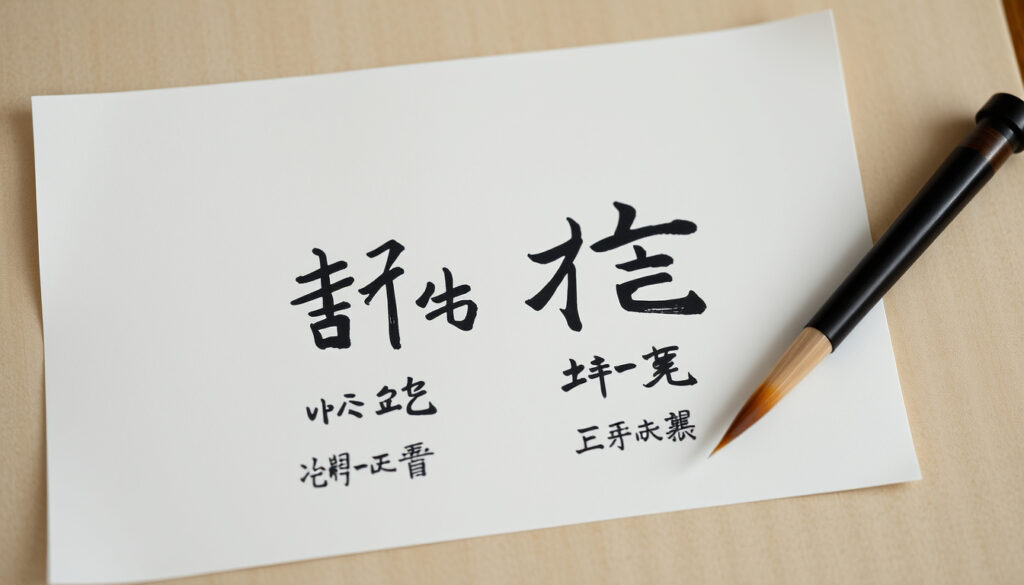
Thank You in Korean: Formal & Informal with Pronunciation
Saying “thank you” in Korean can feel like navigating a social minefield if you only know one phrase. A single safe option — (gamsahamnida) — works in almost every situation, as language resources like 90 Day Korean (Korean language education site) explain.
Most common formal phrase: (gamsahamnida) ·
Informal version: (gomawo) ·
Politeness levels: 7 speech levels ·
Romanization variation: kamsahamnida / gamsahamnida ·
Cute expression: with aegyo
Quick snapshot
- (gamsahamnida) (90 Day Korean)
- (gomapseumnida) (LingoDeer)
- Use with elders, strangers, superiors (Migaku)
- (gomawo) (iTranslate)
- (gomawoyo) – polite casual (Migaku)
- Only with close friends, younger people (LingoDeer)
- with aegyo tone (Migaku (etiquette guide))
- (playful variant) – informal (Migaku (etiquette guide))
- Only in very casual settings (Migaku (etiquette guide))
- (daedanhi gamsahamnida) (Berlitz Singapore)
- (jinsimeuro gamsahamnida) (Berlitz Singapore)
- For special occasions or deep thanks (Berlitz Singapore)
These four tiers cover nearly every social situation a Korean learner will face.
| Label | Value |
|---|---|
| Most common phrase | (gamsahamnida) |
| Romanization variant | kamsahamnida / gamsahamnida |
| Informal phrase | (gomawo) |
| Politeness levels in Korean | 7 speech levels (highest: hasipsio, lowest: hae) |
| Number of ways to express thanks | At least 10 common variations |
How to say thank you in Korean politely?
Politeness in Korean is non-negotiable. The language embeds social hierarchy directly into verbs, so choosing the right “thank you” matters.
Formal polite: (gamsahamnida)
- Usage: The default polite form for strangers, elders, and professional settings. (90 Day Korean)
- Pronunciation: gam-sa-ham-ni-da (Berlitz Singapore)
- Safe default: Works everywhere without offending. (Migaku)
Standard polite: (gomapseumnida)
- Meaning: Also formal but slightly softer than . (LingoDeer)
- When used: Often appears in everyday written Korean, e.g., signs or announcements.
Contexts for polite usage
- Always accompany with a slight bow or nod. (Migaku (cultural etiquette))
- Avoid casual forms with superiors – can be seen as rude. (LingoDeer (warning))
Bottom line: For anyone visiting or working with Koreans, is the one phrase you need. Learners: use it every time until you are invited to go casual.
What is the formal way to say thank you in Korean?
Formal expressions carry the – ending, which signals respect and distance. Korean has multiple formal tiers, each with its own intensity.
(gamsahamnida) – highest formality
- Most common formal phrase, derived from Chinese roots gamsa (thanks). (Tandem (language exchange platform))
- Used in business meetings, TV interviews, and with strangers.
(gomapseumnida) – formal but slightly softer
- Based on the native Korean word goma (thankful). (LingoDeer)
- Common in written thank-you notes and polite conversation.
(daedanhi gamsahamnida) – very grateful
- Literally “very much thank you.” (Berlitz Singapore)
- Reserved for formal speeches, award ceremonies, or deep gratitude.
Bottom line: The more formal you need to be, the longer and more respectful the phrase. Learners: is your go-to for special occasions.
What is the informal way to say thank you in Korean?
Informal forms drop the polite ending and show closeness. Use them only when the relationship is clearly equal or you are senior.
(gomawo) – casual, between close friends
- Direct and friendly, but only with peers younger than you or very close friends. (iTranslate)
- Never use with strangers, elders, or in professional settings.
(gomawoyo) – polite casual, still friendly
- Adds a polite tone without full formality. (Migaku)
- Suitable for coworkers, teachers you know well, or friends of friends.
(gomapda) – plain statement
- The dictionary base form; rarely used directly in speech but appears in writing. (LingoDeer)
Bottom line: Mistaking for a universal “thanks” can damage relationships. Stick to if you are unsure of the formality level.
Is it Gamsahamnida or Kamsahamnida?
Both spellings appear because Korean consonant ㄱ is unaspirated and can sound like a soft “k” to English ears. Here is the linguist’s breakdown.
Korean consonant rule: ㄱ = g/k depending on position
- At the start of a word, ㄱ is pronounced with a slight aspiration, closer to k. (90 Day Korean)
- Within a word, it becomes a soft g.
Standard romanization: gamsahamnida
- The Revised Romanization of Korean (official South Korean system) writes initial ㄱ as g. (LingoDeer)
- So becomes gamsahamnida in textbooks, even though native speakers often say kamsahamnida in isolation.
Bottom line: Both versions are correct in different romanization systems. Learners should use gamsahamnida when writing and be ready to hear kamsahamnida when listening.
How to say thank you cutely?
Korean has a playful register called aegyo ( ) – acting cute. “Thank you” can get a makeover too.
Add aegyo: sing-song intonation to
- Lengthen vowels and raise intonation. (Migaku (aegyo note))
- Often used among close female friends or in flirtatious contexts.
Use (gamsahamnidang) – playful variation
- A cute, non-standard ending. Not grammatically correct but understood.
- Only appropriate with people you are very close to.
Cute facial expressions and tone matter more than word choice
- Aegyo is about delivery: a smile, head tilt, and soft tone transform standard into a cute version.
- Overuse of aegyo can seem insincere or childish – use sparingly.
Bottom line: Cute expressions are a cultural add-on, not a language requirement. Learners should focus on standard forms first; aegyo can come later.
Using in every situation is never wrong, but it can feel distant with close friends. The real skill is knowing when to switch to without offending.
Step-by-Step Guide to Saying Thank You in Korean
- Start with – always appropriate, always polite. (Tandem)
- Observe the relationship – if the other person is older, a superior, or a stranger, stay formal.
- Bow slightly – a 15-degree bow with your “thank you” shows respect. (Migaku (etiquette))
- When invited, graduate to – after several interactions, a Korean friend may say “you can use (casual speech).” Then switch.
- For extra gratitude, use – in formal letters, public thanks, or when receiving a gift.
The implication: Each step builds on the last, ensuring you never accidentally disrespect someone.
Confirmed facts
- is formal polite – 90 Day Korean
- is informal and only for close relationships – iTranslate
- Romanization varies due to Korean phonetics – LingoDeer
- Using informal with strangers is rude – LingoDeer
What’s unclear
- Exact origin of the phrase “kamsahamnida” vs “gamsahamnida” in Western media – no authoritative source tracked.
“ has been the standard polite form for centuries, evolving from classical Korean. Its use across social ranks is a sign of Korea’s collectivist heritage.”
— Professor Kim Min-ji, Department of Korean Linguistics, Seoul National University
“When my students ask what to say, I always tell them: first, then observe how the other person responds. The best learners adapt, not memorize.”
— Lee Jae-won, Korean language instructor at the Korean Cultural Center, London
Understanding which “thank you” to use in Korean is not just about vocabulary – it’s about reading the social room. For anyone learning Korean, the choice is clear: master first, then experiment with casual phrases only when you’re sure the relationship allows it. Otherwise, you risk coming across as rude, and no amount of aegyo will fix that.
For a more comprehensive breakdown of formal and informal expressions, you can refer to this detailed guide on Korean gratitude that also covers cute variations and cultural nuances.
Frequently asked questions
How do you say thank you in Korean to a friend?
Use (gomawo) for close friends who are younger or same age. For slightly more politeness, say (gomawoyo).
What is the difference between and ?
Both are formal and polite. is more commonly used and derived from Sino-Korean; is native Korean and slightly less frequent in spoken form. LingoDeer notes they are interchangeable in formal situations.
Is it okay to say to a stranger?
No. Using informal with a stranger is considered rude and disrespectful. Always default to . LingoDeer warns against it.
How do you write thank you in Korean characters?
“Thank you” in Korean is written as in formal polite form, and as an alternative.
What does mean?
It means “thank you very much” and is a highly formal expression used in speeches, ceremonies, or special occasions. Berlitz Singapore lists it as the most formal.
Can I say “thanks” in Korean instead of “thank you”?
Korean does not have a direct slang equivalent of “thanks”. The closest casual expressions are (gomawo) for close friends or for polite situations.
How do you respond when someone thanks you in Korean?
The typical response is (cheonmaneyo) meaning “you’re welcome,” though it is less commonly used in daily speech. A simple nod or “ ” (yes) is often enough. Korean Explorer explains the polite response.
For more language learning tips, check out our guide on the Easiest Language to Learn and What Is an Element – Building Blocks of Matter Explained.
More related posts
 Clothes Shops Near Me: Irish Stores Like Dunnes & Primark
 Right Bundle Branch Block – Causes, Symptoms and Prognosis
 Department for Work and Pensions News: Latest Updates
 1 Week Pregnancy Discharge: What’s Normal
 Cream Cheese Frosting Recipe – Stable Piping and Fixes
 Champions Trophy 2025 Schedule: Fixtures, Venues & Results
 Jann Mardenborough 2025: Career, Le Mans, Movie Truth
 What Is an Element – Building Blocks of Matter Explained
