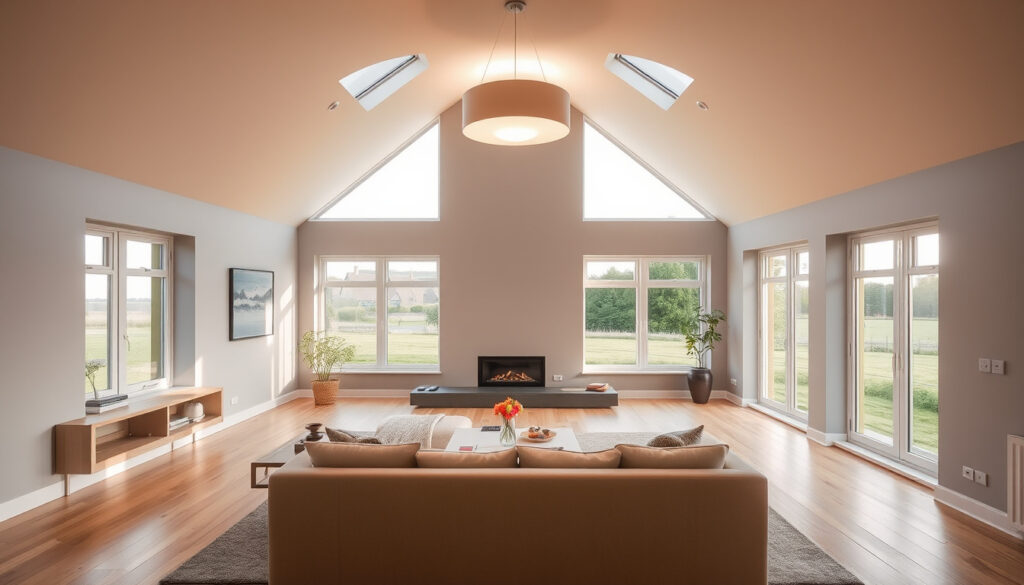
Ceiling Lights for Living Room: A Guide for Irish Homes
Choosing a ceiling light for an Irish living room means balancing style with low ceilings and energy efficiency. A good rule of thumb: the diameter in inches should equal the room length plus width in feet, as recommended by Stillorgan Electrical Services (Irish electricians).
Average living room size in Ireland: 12 ft × 16 ft · Recommended lumens for a living room: 1,500 – 3,000 lumens · Average lifespan of an LED ceiling light: 25,000 hours · Typical ceiling light height from floor: 7–8 ft
Quick snapshot
- Ideal for low ceilings Stillorgan Electrical Services (Irish electricians)
- Sleek, low-profile design Stillorgan Electrical Services (Irish electricians)
- Easy to clean and maintain Stillorgan Electrical Services (Irish electricians)
- Creates a focal point Lighting Dublin (Irish lighting specialists)
- Works over coffee tables or dining areas Lighting Dublin (Irish lighting specialists)
- Available in many styles and heights Lighting Dublin (Irish lighting specialists)
- Adds elegance and drama Lighting Dublin (Irish lighting specialists)
- Requires higher ceilings (8 ft+) Lighting Dublin (Irish lighting specialists)
- Best for formal living rooms Lighting Dublin (Irish lighting specialists)
- Offers even illumination Stillorgan Electrical Services (Irish electricians)
- Nearly invisible when off Stillorgan Electrical Services (Irish electricians)
- Good for modern, minimalist spaces Stillorgan Electrical Services (Irish electricians)
The four main types each serve a different purpose. The pattern: flush mounts and semi-flush mounts suit standard Irish ceilings; pendants and chandeliers need more height; recessed delivers clean, even light but requires professional ceiling work.
| Characteristic | Value |
|---|---|
| Standard living room ceiling height (Ireland) | 8–9 ft |
| Recommended colour temperature | 2700K–3000K (warm white) |
| Average cost of a ceiling light fixture | €50–€300 |
| LED energy savings vs incandescent | Up to 80% less energy |
What Type of Ceiling Light Is Best for a Living Room?
Flush mount vs semi-flush
For ceilings under eight feet — common in many Irish terraced homes — a flush or semi-flush mount is the safest bet. Stillorgan Electrical Services confirm that these sit close to the ceiling, avoiding head bumps while providing broad ambient light. Semi-flush versions drop a few inches for a touch more style without sacrificing clearance.
Pendant lights vs chandeliers
Pendants and chandeliers work best when the ceiling exceeds nine feet. Lighting Dublin (Irish lighting specialists) recommend pendants above coffee tables or dining areas to create a focal point. Chandeliers add formality but need at least eight feet — and in many Irish living rooms that means checking the exact height first.
Recessed lighting options
Recessed lights sit flush with the ceiling, offering an even, glare-free spread. Stillorgan Electrical Services note that installation is more expensive because it requires cutting into the ceiling and wiring each unit. For homeowners who want a minimalist look and can invest in the work, it’s a clean solution. The implication: if you’re renting or on a budget, flush mounts or pendants are far more practical.
How Many Lumens Do You Need for a Living Room?
Calculating lumens based on room size
A standard rule, cited by Lighting Dublin, is 10–20 lumens per square foot. For a typical 12×16 ft Irish living room (192 sq ft), that translates to 1,920–3,840 lumens from your ceiling lights. The lower end works for ambient lighting; the higher end suits rooms where you also read or work.
Brightness for ambient vs task lighting
Task areas — like a reading corner or desk — need more focused light. A single ceiling fixture often isn’t enough. Stillorgan Electrical Services suggest supplementing with floor or table lamps to avoid harsh shadows.
Dimmer compatibility considerations
Dimmer switches let you adjust brightness throughout the day. Lights.ie (Irish online lighting retailer) note that modern LED ceiling lights are dimmer-compatible, but it’s essential to check the packaging — not all LEDs work with older dimmers. The trade-off: without a dimmer, even warm LEDs can feel too bright when you want to wind down.
Without a dimmer, even the best warm LEDs can feel harsh when you want to wind down. Installing a dimmer switch gives you a range from bright to intimate at the flick of a switch.
The takeaway: dimmable LEDs give Irish homeowners the flexibility to adapt lighting to both daytime tasks and evening relaxation.
Should You Choose a Flush Mount or Pendant Light?
Low ceiling considerations
If your ceiling is under eight feet, flush mounts are the practical choice. Stillorgan Electrical Services state that they maximise headroom and are the standard recommendation for older Irish homes.
Aesthetic impact
Pendants draw the eye down and can make a room feel more intimate. They work particularly well over a coffee table or a dining area within an open-plan living space. Lighting Dublin describes pendants as a “statement piece” that anchors the room.
Installation and cleaning differences
Flush mounts are easier to clean — a quick wipe of the glass or diffuser does the job. Pendants, especially those with open shades, collect dust and need more careful attention. The pattern: simplicity in maintenance often trades off with design flair. For Irish homeowners, the choice boils down to ceiling height and how much you value a focal point over low upkeep.
The catch: flush mounts can feel too plain in larger rooms, while pendants might overwhelm a small space. Measure both your ceiling and your room’s proportions before deciding.
What Are the Latest Trends in Living Room Ceiling Lights?
Smart lighting integration
Voice-controlled and app-based ceiling lights are gaining traction in Ireland. Lights.ie reports that demand for smart-compatible fixtures has risen sharply. Compatible with Alexa and Google Home, these systems let you adjust colour and brightness without getting up.
Minimalist and geometric designs
Geometric shapes — hexagons, rings, and linear bars — are popular in 2024–2025. Lights.ie notes that black modern ceiling lights are trending for small living rooms under 20 sq m, offering a crisp contrast against white ceilings.
Warm-toned LED fixtures
Warm white (2700K–3000K) remains the top choice for Irish living rooms. Lucas LED (Irish LED retailer) explains that warm tones create a cozy atmosphere suited to Ireland’s long evenings, while cooler whites are better saved for kitchens and bathrooms.
While smart ceiling lights offer convenience, the initial cost can be double that of standard LEDs. For most Irish homes, a dimmer switch achieves similar flexibility at a fraction of the price.
For most homeowners, a well-chosen dimmable LED fixture offers the best balance of trend and practicality.
Where to Buy Ceiling Lights for Living Room in Ireland?
Specialist lighting stores
Stillorgan Decor (Dublin showroom) offers a wide range of ceiling lights with expert advice in-store. They stock both traditional and modern styles.
Online retailers with Irish delivery
Lampandlight.ie (Irish online lighting retailer) offers free delivery on orders over €99, and they carry flush mounts, pendants, and chandeliers. Lights.ie is another strong online option with fast shipping and free returns.
IKEA and high-street options
IKEA’s Irish store (Dublin) has affordable ceiling lights in modern designs, though their flush mounts tend to be basic. Next.ie (Irish high-street retailer) provides a curated selection with free returns and next-day delivery to most parts of Ireland. The pattern: online specialists offer the widest choice; high-street stores are better if you want to see the light in person.
Why this matters: Whether you buy online or in-store, check the return policy and delivery costs. For Irish customers, free returns and delivery over €99 can save a chunk of the overall spend.
Comparison: Flush Mount vs Pendant vs Recessed
Three popular types, one key difference: clearance. Here’s how they stack up for a typical Irish living room.
| Aspect | Flush Mount | Pendant | Recessed |
|---|---|---|---|
| Best for | Low ceilings (<8 ft) | Ceilings >9 ft, focal points | Modern, even lighting |
| Average cost (fixture) | €50–€150 | €80–€300 | €30–€100 per unit + installation |
| Installation difficulty | Easy (DIY possible) | Moderate (may need electrician) | Professional required |
| Light distribution | Broad, slightly downward | Focused, downward | Even, wide-angle |
The trade-off: flush mounts are the cheapest and easiest, but they lack the drama of pendants. Recessed gives the cleanest look but costs more upfront.
Specifications at a Glance
When comparing ceiling lights, a few numbers matter most: lumens, colour temperature, lifespan, and cost. Here they are across the main types.
| Spec | Flush Mount | Pendant | Recessed |
|---|---|---|---|
| Typical lumens | 1,200–2,500 lm | 1,500–3,000 lm | 800–1,600 lm per unit |
| Colour temperature | 2700K–3000K | 2700K–3000K | 2700K–3000K |
| Bulb type | LED integrated or replaceable | LED / E27 screw | LED integrated |
| Average lifespan | 25,000–30,000 hours | 25,000 hours | 25,000 hours |
| Average fixture cost | €50–€150 | €80–€300 | €30–€100 per unit |
| Dimmer compatibility | Yes (check LED rating) | Yes (check LED rating) | Yes (with compatible driver) |
All three types deliver excellent lifespan when using LEDs — 25,000 hours means roughly 12 years of typical evening use. Warm white is the universal preference for living rooms.
Pros and Cons of LED vs Halogen Ceiling Lights
Upsides
- LEDs use up to 80% less energy than halogens (Lux Lighting (Irish lighting store))
- LEDs last 25 times longer (up to 25,000 hours)
- LEDs generate less heat, safer for fabric shades
- Warm LED colour quality is now equal to halogen
Downsides
- LED fixtures cost more upfront (€50–€300 vs €20–€80 for halogen)
- Some LEDs are not dimmer-compatible; need to check
- Halogen bulbs are still cheaper to replace in the short term (Stillorgan Electrical Services)
For most Irish homeowners, the long-term savings and lifespan of LEDs outweigh the higher initial price.
Step-by-Step Guide to Choosing a Ceiling Light
- Measure your room. Length and width in feet, add them together to get the ideal diameter in inches (Stillorgan Electrical Services). For a 12×14 ft room, look for a 26-inch fixture.
- Check ceiling height. Under 8 ft → flush or semi-flush. 8–9 ft → semi-flush or small pendant. Over 9 ft → pendant or chandelier.
- Calculate needed lumens. Room sq ft × 10–20 = target lumens. For a 192 sq ft living room, aim for 2,000–3,000 lumens from all ceiling lights combined.
- Pick colour temperature. 2700K–3000K (warm white) is best for living rooms (Lucas LED).
- Decide on dimmer. If you want flexibility, choose a fixture marked “dimmable” and install a compatible dimmer switch.
- Choose style. Match your existing decor — minimalist, industrial, or traditional. Black modern fixtures are trending for 2026 (Lights.ie).
- Select a retailer. Compare prices and delivery policies. Lampandlight.ie and Next.ie both offer free returns; Stillorgan Decor has a physical showroom in Dublin.
The pattern: start with measurements, then let ceiling height and style preference guide your choice. Each step eliminates options until only the right fit remains.
What We Know vs What’s Unclear
Confirmed facts
- LED lights last 25,000+ hours (Lux Lighting)
- Flush mounts are best for ceilings under 8 ft (Stillorgan Electrical Services)
- Warm white light (2700K–3000K) is preferred for living rooms (Lucas LED)
What’s unclear
- Exact energy savings vary by fixture and usage
- Smart light price premium vs standard LED is decreasing — but not yet negligible
- Dimmer compatibility for older Irish wiring may vary by home
Irish homeowners can confidently rely on LED lifespan and warm white recommendations, but should verify compatibility with their existing electrical setup.
Expert Perspectives
“For Irish living rooms, dimmable warm LEDs are becoming the standard because they let homeowners adjust the mood from bright task lighting to cozy evening ambience.”
— Lighting designer at Hegarty Lighting (Irish lighting design firm)
“Switching to LED ceiling lights can cut your lighting energy use by up to 80%, and with the long lifespan, the savings add up significantly over time.”
— Energy efficiency expert at SEAI (Sustainable Energy Authority of Ireland)
Both experts underscore the shift to dimmable warm LEDs as the practical, energy-efficient solution for Irish homes.
Frequently asked questions
Can I install ceiling lights myself?
Simple flush mounts and pendants can be DIY if you’re comfortable with basic wiring, but always disconnect power first. For recessed lights or if your ceiling has no existing junction box, hire a certified electrician.
What is the best color temperature for a living room?
Warm white, between 2700K and 3000K, is recommended by most Irish lighting retailers for a cozy atmosphere.
How often should I replace ceiling lights?
LED fixtures last 25,000 hours or more — typically 12+ years of normal use. Replace the bulb or driver when it starts flickering or dims significantly.
Do ceiling lights require special wiring for dimmers?
Yes. You need a dimmer switch rated for LED loads. Many modern dimmers are compatible, but check the fixture’s label. Older dimmers designed for incandescent bulbs may not work.
Are smart ceiling lights worth the investment?
If you value voice control and scheduling, yes. For most Irish homes, a standard LED dimmer gives similar flexibility at a lower price.
Can I mix different ceiling light styles in the same room?
Absolutely. Many living rooms use a central flush mount for ambient light and pendant lights over a coffee table or dining area for accent.
How do I clean delicate chandeliers safely?
Turn off power, use a microfiber cloth or a soft duster. For crystal chandeliers, a mix of water and mild soap works; avoid abrasive cleaners.
The final takeaway: Choosing a ceiling light for your Irish living room doesn’t have to be complicated. Start with your ceiling height, calculate the lumens you need, and invest in a dimmable warm LED fixture. For Irish homeowners, the smartest move is combining a flush mount for general light with a dimmer switch — it gives you flexibility without breaking the bank.
More related posts
 Graduation Dress Guide: Modest, White & More for UK/Europe
 Credit Card for Bad Credit: Instant Approval Guide
 Ickenham Travel Collapse Administration – Customer Refunds Guide
 Bangladesh vs Sri Lanka – Head-to-Head Records and Stats
 Fat Amy: Pitch Perfect Character vs. F-35 Jet Nickname
 Bread & Butter Wine: Origin, Reviews, Price & Where to Buy
 Gregor Fisher: Weight Loss, Health, and 2026 Tour
 Can Dogs Eat Cauliflower? Safety, Benefits & Serving Guide
