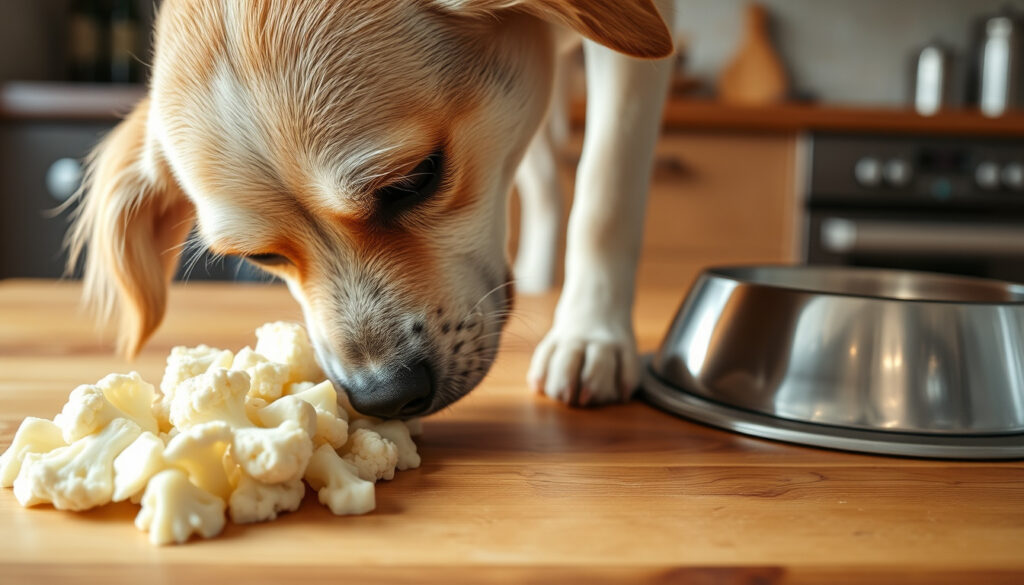
Can Dogs Eat Cauliflower? Safety, Benefits & Serving Guide
You’ve probably wondered if that leftover cauliflower on your plate is safe to share with your dog. The short answer is yes — plain cauliflower is non-toxic and low in calories, making it a decent treat when served correctly.
Calories per 100 g raw cauliflower: 25 · Safe serving size (small dog): 1-2 small florets · Safe serving size (large dog): 3-4 small florets · Risk of gas/bloating: yes, with overconsumption · Toxicity to dogs: none (non-toxic) · Fiber content per 100 g: 2 g
Quick snapshot
- Non-toxic for dogs (PetMD veterinary resource)
- Raw and cooked safe (PetMD veterinary resource)
- Avoid seasonings (PetMD veterinary resource)
- Low calorie treat (Dog Standards pet nutrition blog)
- High in fiber and vitamin C (PetMD veterinary resource)
- Antioxidants (Dog Standards pet nutrition blog)
- Gas and bloating if overfed (Dog Standards pet nutrition blog)
- Choking hazard in large pieces (Dog Standards pet nutrition blog)
- Isothiocyanate in high amounts (Dog Standards pet nutrition blog)
- Wash thoroughly (Dog Standards pet nutrition blog)
- Cut into small florets (Dog Standards pet nutrition blog)
- Steam or boil without seasoning (Dog Standards pet nutrition blog)
| Fact | Value |
|---|---|
| Toxicity | None (PetMD veterinary resource) |
| Safe serving size (small dog) | 1-2 small florets |
| Safe serving size (large dog) | 3-4 small florets |
| Calories per 100 g | 25 kcal (Pumpkin.care pet health platform) |
| Fiber per 100 g | 2 g (Pumpkin.care pet health platform) |
| Vitamin C per 100 g | 48.2 mg (PetMD veterinary resource) |
These figures reveal that cauliflower’s main value is as a low-calorie, hydrating snack rather than a nutritional staple.
Is cooked cauliflower okay for dogs?
Cooked plain cauliflower is perfectly safe for dogs. The PetMD veterinary team states that cauliflower is non-toxic and can be included in a dog’s treat rotation. The key is preparation: avoid any seasonings like garlic, onion, or salt, which are toxic to dogs (Dog Standards pet nutrition blog).
How to cook cauliflower for dogs
- Steam or boil florets until soft — no oil, butter, or spices.
- Let them cool completely before serving.
- Cut into bite-sized pieces to match your dog’s size.
Safe seasoning for dog cauliflower
Zero seasoning is the rule. Garlic and onion, even in powder form, can cause hemolytic anemia in dogs. A plain steamed floret is all your dog needs. If you want to add flavor, a tiny sprinkle of dog-safe herbs like parsley (in moderation) is acceptable, but most dogs enjoy the mild taste of cauliflower as is (Native Pet pet nutrition blog).
A single floret laced with garlic salt could land a small dog in the emergency room. Cooking plain is the only safe route.
Can dogs eat cauliflower raw?
Raw cauliflower is also safe, but it comes with added risk. The Dog Standards pet nutrition blog warns that raw pieces can be a choking hazard, especially for small breeds. Because raw cauliflower is denser and harder to break down, it may also cause more gas and digestive discomfort (Dragonfly Products pet nutrition guide).
Raw cauliflower choking hazard
- Always chop raw cauliflower into very small, pea-sized pieces for small dogs.
- Supervise your dog while they eat raw florets — gulping can lead to obstruction.
Digestibility of raw vs cooked
Lightly cooked or steamed cauliflower is easier on a dog’s gastrointestinal tract. The Dog Standards pet nutrition blog notes that cooking breaks down some of the tough plant cell walls, making nutrients more accessible and reducing gas potential. If your dog has a sensitive stomach, stick with cooked.
What veggies can dogs not eat?
Not all vegetables are dog-friendly. Several common kitchen staples are toxic to dogs, which makes cauliflower a safe alternative worth understanding.
Toxic vegetables for dogs
- Onions and garlic (all forms) — cause hemolytic anemia.
- Grapes and raisins — can cause acute kidney failure.
- Wild mushrooms — may contain toxins.
- Raw potatoes (green parts) — solanine poisoning.
Safe vegetable list
- Cauliflower (safe, low-calorie, high fiber) (Rover.com pet care platform)
- Broccoli (safe in small amounts, but contains isothiocyanate) (PetMD veterinary resource)
- Carrots (raw or cooked, great for teeth)
- Green beans (plain, low-calorie)
- Celery (crunchy and hydrating)
The trade-off: while cauliflower and broccoli are both safe, broccoli carries a slightly higher risk of gastric irritation due to isothiocyanate. Cauliflower is generally the milder choice (Pumpkin.care pet health platform).
A dog that gobbles a whole head of cauliflower may end up with painful gas and diarrhea. Keep servings small — treats should never exceed 10% of daily calories (Rover.com pet care platform).
Which is better for dogs, cauliflower or broccoli?
Both vegetables are safe, but cauliflower edges out broccoli for everyday treats because of its lower fiber load and reduced isothiocyanate content. The PetMD veterinary resource confirms that broccoli is safe in moderation, but some dogs experience more gas and stomach upset from the florets.
Nutritional comparison
- Cauliflower: 25 calories, 2 g fiber, 48 mg vitamin C per 100 g
- Broccoli: 34 calories, 2.6 g fiber, 89 mg vitamin C per 100 g
Broccoli has more vitamin C but also more isothiocyanate, a compound that can irritate a dog’s stomach lining when fed in excess. Cauliflower is the safer choice for dogs prone to digestive issues (Pumpkin.care pet health platform).
Safety and serving size differences
Serving sizes are similar: 1-2 florets for small dogs, 3-4 for large dogs. Both should be plain and cooked. The Rover.com pet care platform emphasizes that portion control matters more with broccoli due to the isothiocyanate risk.
If your dog has a history of pancreatitis or sensitive stomach, cauliflower is the safer bet. Broccoli’s higher fiber can trigger bloating in predisposed breeds like Bulldogs and Boxers.
The implication: cauliflower is the lower-risk option for dogs with digestive sensitivities, while broccoli offers higher vitamin C at the cost of potential gastric irritation.
Can dogs eat cauliflower cheese?
Cauliflower cheese is a popular human dish, but it’s not ideal for dogs. The cheese sauce typically contains lactose, which many adult dogs cannot digest properly, plus added salt and seasonings like garlic or onion (Dog Standards pet nutrition blog).
Cheese risks for dogs
- Lactose intolerance can cause diarrhea and vomiting.
- High salt content can lead to dehydration or sodium ion poisoning in small dogs.
- Seasonings like garlic are toxic.
Cauliflower cheese alternative
Make a dog-safe version by steaming cauliflower florets and topping them with a tiny sprinkle of low-fat, plain cottage cheese (which has less lactose). Avoid any processed cheese sauces or powders (Native Pet pet nutrition blog).
Upsides
- Low-calorie treat (PetMD veterinary resource)
- High fiber aids digestion (Pumpkin.care pet health platform)
- Supports dental health through chewing (Dragonfly Products pet nutrition guide)
- Hydrating (over 90% water) (Rover.com pet care platform)
Downsides
- Can cause gas and bloating if overfed (Dog Standards pet nutrition blog)
- Choking hazard in large pieces
- Stalks should be avoided (Native Pet pet nutrition blog)
- Excessive feeding may cause diarrhea
What we know and what’s still uncertain
Confirmed facts
- Cauliflower is non-toxic to dogs (PetMD veterinary resource)
- Plain cooked cauliflower is safe (Dog Standards pet nutrition blog)
- Overconsumption causes gas (Dog Standards pet nutrition blog)
- Cauliflower provides vitamin C, fiber, and antioxidants (PetMD veterinary resource)
What’s unclear
- Exact amount of isothiocyanate that is harmful to dogs vs humans
- Long-term effects of daily feeding on canine gut health
- Whether cauliflower leaves are as safe as florets (early data suggests yes, but more research needed)
Cauliflower is completely safe and nontoxic to dogs.
— Dr. Laci Schaible, veterinarian, PetMD veterinary resource
Dogs can safely eat cauliflower, as long as you take a few precautions when you prepare it.
— Native Pet pet nutrition blog
For the average dog owner, the choice is clear: offer plain, cooked cauliflower as an occasional treat, sized to your dog’s body weight. Skip the seasoning and watch for gas. For owners of small breeds or dogs with sensitive stomachs, cooking and chopping into tiny pieces is non-negotiable — or risk a bloated, uncomfortable pet.
Related reading: What Is Keto Diet – Basics, Foods, Benefits, Risks
Pet owners can find comprehensive safety guidelines in our vet-reviewed guide on cauliflower for dogs, including tips on serving cauliflower raw or cooked.
Frequently asked questions
Can dogs eat cauliflower leaves?
Yes, leaves are safe, but the stalks are not recommended due to high fiber content that may cause digestive upset (Native Pet pet nutrition blog).
Can dogs eat cauliflower rice everyday?
No — daily feeding may lead to gas, diarrhea, and nutrient imbalance. Use cauliflower rice as an occasional treat, not a meal replacement.
How much cauliflower can I give my dog?
1-2 small florets for small dogs (under 20 lbs), 3-4 for large dogs. Treats should not exceed 10% of daily calories (Rover.com pet care platform).
Can puppies eat cauliflower?
Yes, in very small cooked pieces. Puppies have sensitive digestive systems, so start with one tiny floret and monitor for gas or loose stool.
Is cauliflower good for dogs with allergies?
It can be — cauliflower is rarely allergenic and provides antioxidants. However, consult your vet before introducing new foods to an allergy-prone dog.
What is the healthiest vegetable for dogs?
There’s no single winner, but cauliflower, green beans, carrots, and pumpkin are all excellent choices for different nutrient profiles.
Can dogs eat frozen cauliflower?
Yes, frozen cauliflower (plain, no seasoning) is safe. Thaw or cook it slightly to reduce the choking risk.
More related posts
 Graduation Dress Guide: Modest, White & More for UK/Europe
 Max Verstappen to Mercedes: Rumors, Denial & Full Timeline
 Robin Williams Cause of Death: Full Story of His Final Days
 Shohei Ohtani: Contract, Sleep, Family, and Unprecedented Career
 Department for Work and Pensions News: Latest Updates
 TV Shows with Jack Osbourne: Complete List and Career Highlights
 Maslow Hierarchy of Needs: 5 Levels and Anxiety
 In Print We Trust Review: Quality, Codes, and Founder
